In a land where faith is preached loudly and violence lives quietly, survival demands remembering what forgiveness cannot erase.
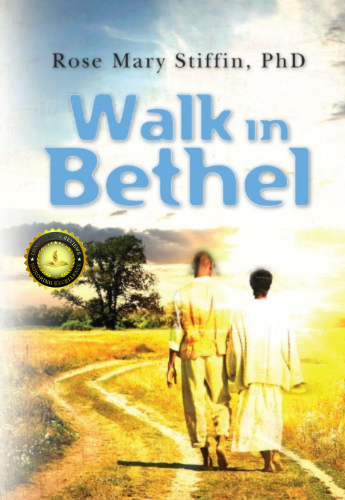
Walk in Bethel by Rose Mary Stiffin, PhD, is a commanding Southern Gothic novel that excavates the buried truths of the Mississippi Delta and exposes how a single act of violence can reverberate across generations. Set in the late nineteenth century, the novel immerses readers in a world defined by heat, racial terror, rigid social codes, and an uneasy reliance on faith. From its opening scenes, Stiffin establishes Bethel as a moral crossroads—a place where belief, fear, and human desire collide with devastating consequences.
At the center of the narrative is Nashville Thompson, the wife of a Black preacher whose inner life is shaped by contradiction. Though she believes God walks the earth, she quietly doubts the efficacy of prayer, viewing it as hope rather than certainty. This tension becomes the emotional spine of the novel. When Nashville narrowly escapes a brutal assault by two white youths, her survival is not an ending but a beginning. What follows is a cascade of secrecy, guilt, desire, and moral compromise that binds together three families and alters their destinies in ways neither punishment nor prayer can fully undo.
Her refusal to make trauma simple or easy to understand is both deliberate and commendable. Violence in Walk in Bethel is not treated as spectacle, nor is faith presented as an easy refuge.
Instead, the novel focuses on aftermath—on the psychological weight carried by survivors, witnesses, and even those who believe themselves righteous. Stiffin’s vernacular prose is vivid and grounded, capturing the rhythms of Southern speech while allowing her characters to exist as complex, morally conflicted individuals rather than symbols. Each choice, whether made in fear or desire, carries consequences that echo far beyond the moment.
Structurally, the novel unfolds as a multi-generational saga, tracing how silence and unspoken truths shape marriages, parenthood, and identity decades later. In this way, Walk in Bethel invites comparison to Toni Morrison’s Beloved and the film Mudbound, works that confront the lingering presence of racial violence and inherited trauma without offering false closure. Like those stories, Stiffin’s novel insists that history is not past—it is lived daily through memory and consequence.
The ideal audience for Walk in Bethel includes readers of literary fiction, Southern Gothic, and historical narratives that examine race, faith, and moral ambiguity with honesty. Book clubs and academic readers will find particular value in its layered exploration of forgiveness versus forgetting, and the cost of survival in unjust systems.
Walk in Bethel is a novel that lingers. It reminds readers that endurance is not the same as healing —and that some truths, once buried, demand to be carried forward rather than laid to rest.
Purchase the Book Today on Amazon.
Author: Rose Mary Stiffin PhD
Page Count: 442
Rating: 4.7/5 Stars
Reviewer: Sophia Rogers